Showing posts with label (f)art. Show all posts

Wednesday, 21 January 2015

The consolations of art

The brilliant mind of Alain de Botton does it again: finding meaning applicable to our own daily lives, in the works of great artists.

http://www.thebookoflife.org/edward-hopper-revamps-motel-chain-train-carriage-and-diner/

"Hopper discovered that – even when others love us very much – some essential part of us is always alone.

It is this recognition that makes his paintings so compelling. And indeed, it is by addressing loneliness that art can be most therapeutic: consoling us and reassuring us that estrangement and sorrow are normal, that we are neither very strange nor very shameful for experiencing them. Sad and lonely art allows us as viewers to witness an echo of our own griefs and disappointments, and thereby to feel less personally persecuted and beset by them."

Hopper, Excursion into Philosophy 1959
Excursion into Philosophy, 1959


Friday, 7 September 2012

Random Poetry Post: E.E. Cummings - 'pity this busy monster, manunkind'

'pity this busy monster, manunkind'

pity this busy monster, manunkind,

not. Progress is a comfortable disease:
your victim (death and life safely beyond)

plays with the bigness of his littleness
--- electrons deify one razorblade
into a mountainrange; lenses extend
unwish through curving wherewhen till unwish
returns on its unself.
                          A world of made
is not a world of born --- pity poor flesh

and trees, poor stars and stones, but never this
fine specimen of hypermagical

ultraomnipotence. We doctors know

a hopeless case if --- listen: there's a hell
of a good universe next door; let's go

E. E. Cummings


Make the most of this Friday, and every other day.


illustration by Evan Robertson

Thursday, 12 July 2012

Love is a struggle


 Truly beautiful video and sounds from Soulade.

 (warning: not really suitable for work)

Sunday, 20 November 2011

A thing of sheer beauty

Sunday music doesn't get any better than this:


The Waste Land

IV. Death by Water

Phlebas the Phoenician, a fortnight dead, Forgot the cry of gulls, and the deep sea swell And the profit and loss. A current under sea Picked his bones in whispers. As he rose and fell He passes the stages of his age and youth Entering the whirlpool. Gentile or Jew O you who turn the wheel and look windward, Consider Phlebas, who was once handsome and tall as you.

Wednesday, 3 August 2011

Inside North Korea

AP Asia chief photographer and bureau chief were granted unprecedented access to parts of North Korea, in an attempt to offer a wider coverage of the nation in its isolated condition.

In some cases these can be appreciated more as artistic pieces than photojournalism, but viewing them still is a worthwhile experience.

Find them here.

Thursday, 27 January 2011

Sometimes less is definitely more

The Four Icon Challenge aims to summarize entire books or films in just 4 images.


Check it out here.


Still a work in progress apparently, but one I'll be coming back to.

Tuesday, 24 August 2010

Light and Dark

Some yin, some yang, and you have Da Vinci's technique of painting shadow and light. Well, not exactly, but that was the aim. The method involved smoothly blending shadows and lights in a manner that resembled the motion of smoke. Some even claimed that Da Vinci used his fingers to achieve this effect. And this is how he did it to create one of the biggest 'mysteries' of the art world, Mona Lisa's smile.

Read more about it here.

Sunday, 6 June 2010

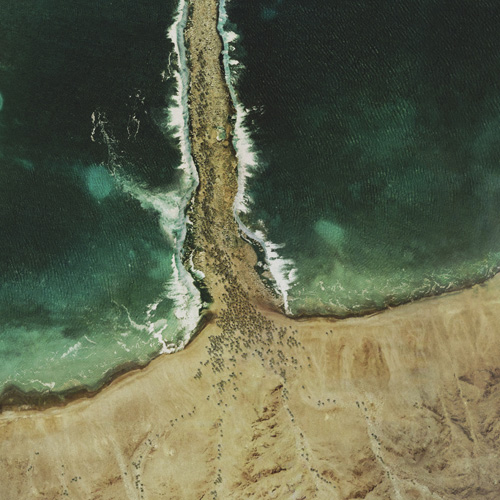
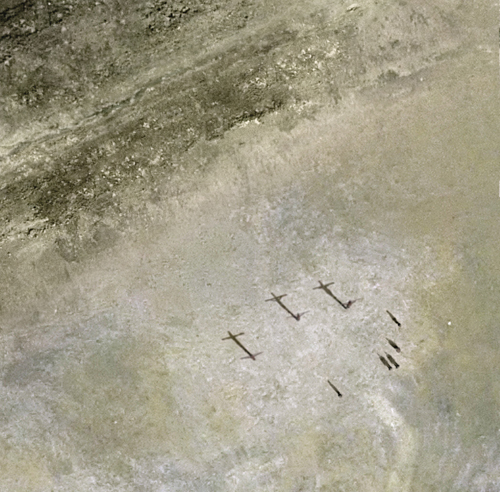
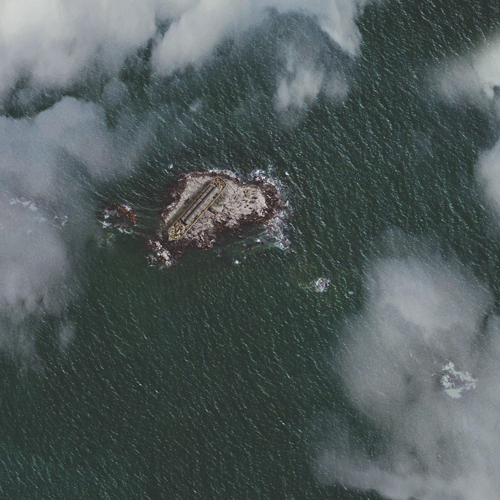
The Bible according to Google Earth


Moses parting the Red Sea


Noah's Ark


Adam and Eve in the Garden of Eden (lying on a patch of grass next to the lake)


The Crucifixion


Very refreshing. These guys rocked my world.

Eye Candy

The internet is very large.

That is a good thing.

http://butdoesitfloat.com/

http://www.nachoalegre.com/diaries.html

http://zero1blog.com/

Friday, 16 April 2010

Cultural dose of the day #1

YouTube does it again. I am a big fan of technology's ability to break down boundaries and eradicate distances, and this is a great example why. A YouTube user took photographs of every single piece of art in MoMA (The Museum of Modern Art) and assembled them into a neat slide show. Spotted in there are the works of Dali, Bacon, Pollock, Van Gogh and Lichtenstein, to name a few.

Wonder what John Berger and people who read him would have to say about this. The Internet has provided the viewers with new ways of seeing, more distanced, less spatially reliant and much less time-consuming. Perspective changes, and so does the spectator. Has the spectator really witnessed and seen the object, if they were separated by a laptop screen? 'Digital Spectators: The LCD Canvas'. I could write an essay on this. Some day.